Hatha Yoga: A Beginner-Friendly Introduction
Hatha Yoga is one of the best starting points for beginners because it moves at a manageable pace and focuses on fundamentals: posture basics, breathing control, and safe alignment. This article explains what Hatha is, what you do in a class, and how to start correctly.
What Hatha Yoga Is
In modern studios, “Hatha Yoga” usually means a foundation-style class that teaches basic postures with time to learn technique. The practice typically includes standing poses, gentle backbends, simple balance work, and easy floor postures, with clear pauses for breathing and alignment. Compared to faster styles, Hatha gives you more time to feel what your body is doing.
Example
A beginner Hatha session might include Mountain Pose → Forward Fold → Low Lunge → Downward Dog → Cobra, with short pauses to adjust stance, spine position, and breathing.
What You Train in Hatha
Hatha builds skills that make every other style safer and easier: joint positioning, controlled range of motion, and steady breathing under mild effort. Technically, you are training mobility (range), stability (control), and breathing efficiency (recovery and calm). This combination improves posture quality and movement confidence.
- Mobility: learning safe range in hips, shoulders, and spine.
- Stability: maintaining control in standing and balance poses.
- Breath control: using slow breathing to manage intensity.
- Body awareness: noticing tension patterns and correcting them.
Example
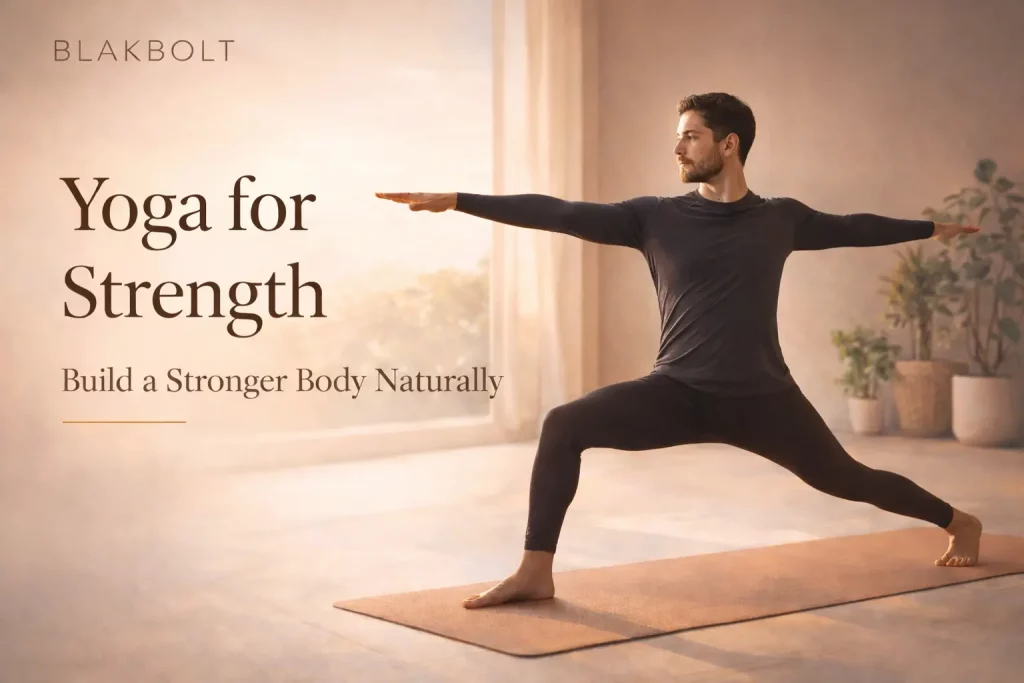
In Warrior II, the goal is not “going lower.” The goal is stable feet, aligned knees, level pelvis, and steady breathing while the legs work.
What to Expect in Your First Hatha Class
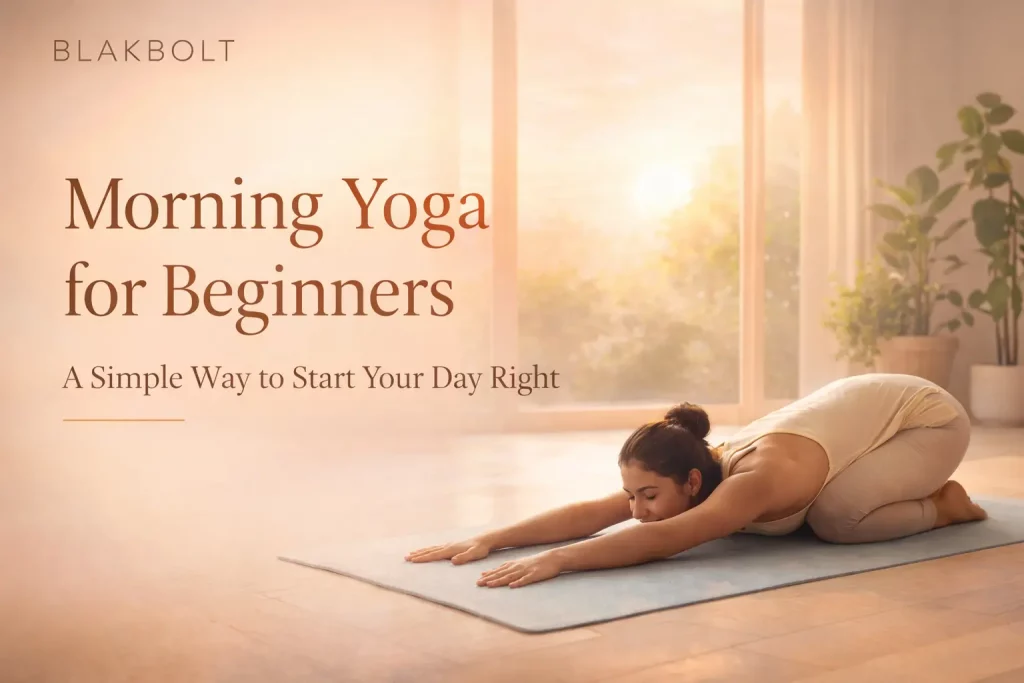
A beginner-friendly Hatha class is structured to be learnable. You’ll usually warm up, practice standing fundamentals, do a small set of floor postures, and finish with relaxation. The pace is intentional: you learn positions before intensity increases.
Typical Class Elements
- Warm-up (gentle spine and hip movement)
- Standing poses (foundation alignment)
- Simple backbends and twists
- Breathing cues + short rests
- Relaxation (Savasana)
What Beginners Often Misunderstand
- You do not need extreme flexibility to start
- Shaking is normal in new strength ranges
- Props are tools, not “cheating”
- Breath quality matters more than depth
- Progress is measured in control, not shape
Example
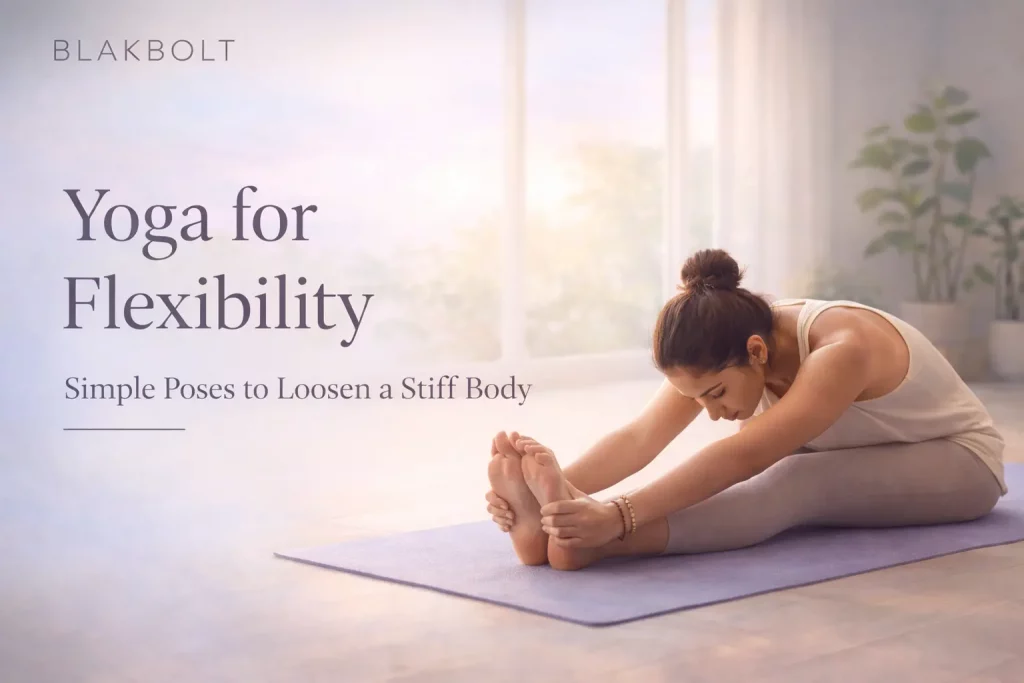
If your hamstrings are tight, you might bend knees in Forward Fold. The “correct” version is the one where your spine stays controlled and your breath stays smooth.
Simple Breathing for Beginners
Hatha typically uses calm, natural breathing to keep effort manageable. A technical way to approach this is to use breath as an “intensity gauge.” If your breath becomes rushed or you start holding it, reduce range or come out of the posture. For beginners, nasal breathing is a safe default because it naturally slows the breathing rate.
Example
Use a simple rule: inhale while lengthening (creating space), exhale while settling into the posture. If you cannot keep a slow exhale, make the pose easier and rebuild control.
Hatha vs. Faster Yoga Styles (Simple Comparison)
Hatha is often the best first step because it prioritizes technique. Faster classes can be excellent, but they can also hide weak points when transitions happen quickly. If you build foundations in Hatha, you’ll usually feel more stable and confident in flow-based classes later.
Hatha Yoga
- Slower pace, more time for alignment
- Great for beginners and skill-building
- Lower transition complexity
- Breath stays calm and measurable
Flow-Based Classes (e.g., Vinyasa)
- Faster pace, more continuous transitions
- More conditioning and endurance demand
- Less time to adjust in each pose
- Breath control can be harder at first
Example
If you’re new, aim for 2–3 Hatha sessions per week for technique. Once breathing and alignment feel stable, add a light flow session weekly to build endurance.
Safety note: sharp pain, numbness, or joint-specific discomfort is a stop signal. Modify range, use props, and consider professional guidance if you have injuries or medical conditions.