Why Flexibility Matters More Than Most People Think
Flexibility is often treated as something only athletes, dancers, or advanced yoga practitioners need, but in reality it affects everyday life much more than people realize. Simple actions like bending down to tie your shoes, reaching for something on a shelf, turning your neck while driving, or sitting comfortably for long periods all depend on how freely your body moves. When the body is stiff, these ordinary tasks can feel more difficult than they should. Yoga helps by gradually improving range of motion in a safe and mindful way. In simple terms, flexibility is not about showing off; it is about moving through life with less restriction.
What Flexibility Really Means
Many people think flexibility means being able to do the splits or place your foot behind your head, but that is a narrow and misleading idea. True flexibility means that your muscles and joints can move through their natural range with ease, control, and comfort. It is not just about how far you can stretch, but how well your body functions. A useful example is a door hinge. If the hinge moves smoothly, the door opens easily. If it is stiff, the movement becomes awkward and strained. The body works in a similar way. Flexibility is about smoother movement, not extreme shapes.
Why So Many People Feel Stiff
Modern life encourages stiffness more than freedom of movement. Long hours of sitting, looking at screens, driving, working at desks, and sleeping in fixed positions can all make the body feel tight. Common problem areas include the hips, hamstrings, shoulders, chest, and lower back. Many people also experience stiffness because they do not move enough during the day, even if they are otherwise healthy. For example, someone can go to the gym three times a week and still feel tight if they spend the rest of their time sitting in a chair. Yoga is valuable because it introduces movement in a more balanced and thoughtful way.
Why Yoga Is So Effective for Flexibility
Yoga is especially effective for flexibility because it combines stretching with breathing, awareness, and posture. This matters because tightness is not always just physical. Sometimes the body stays tense because the nervous system is tense. When yoga encourages slow breathing and steady attention, it helps the body feel safe enough to release unnecessary holding. That is one reason yoga often feels different from simply forcing a stretch. A simple comparison would be this: trying to pull a tight rope harder does not always help, but loosening the tension in the system can make the rope easier to move. Yoga works in that wiser way.
Why Beginners Should Not Rush Flexibility
One of the biggest mistakes beginners make is trying to become flexible too quickly. This often leads to frustration or even injury. Flexibility develops best through patience and repetition, not force. A beginner may think progress should happen in a few days, but the body usually adapts more gradually. Imagine trying to open a very tight jar lid. Sudden force may slip your hand or hurt your wrist, but steady pressure often works better. Yoga teaches this exact lesson. Consistent, calm stretching changes the body more effectively than aggressive effort.
The Difference Between Tightness and Weakness
At a PhD level, it is useful to understand that what people call “tightness” is not always simply a short muscle. Sometimes a body part feels tight because it is also weak, overworked, or protecting itself. For example, tight hamstrings may not only reflect a need for stretching; they may also reflect posture, pelvic position, or lack of strength in surrounding muscles. This is why yoga can be so powerful for flexibility. It often combines mobility with stability. In other words, yoga does not just ask the body to open; it teaches the body how to support that opening.
Why Breathing Makes Stretching More Effective
Breathing is one of the most overlooked parts of improving flexibility. When people hold their breath during a stretch, the body often becomes more guarded and tense. But when the breath stays slow and smooth, the stretch usually becomes more effective and more sustainable. This is because the nervous system responds to breath. A simple example is the difference between clenching your jaw while trying to relax versus exhaling slowly and letting the shoulders drop. The second approach creates a totally different physical response. In yoga, breathing is not separate from flexibility training; it is part of the mechanism that makes flexibility possible.
Why Consistency Beats Intensity
A short yoga practice done regularly will usually improve flexibility more than a long session done occasionally. This is because the body adapts well to repeated signals over time. Stretching once for an hour and then doing nothing for ten days is less effective than practicing for fifteen minutes several times a week. Think of watering a plant. Flooding it once and then ignoring it does not work as well as giving it regular care. Flexibility works in much the same way. The body changes best when it receives consistent, manageable input.
Where Most People Need Flexibility the Most
Most people do not need extreme flexibility everywhere. They need better mobility in the places modern living makes tight. The hips often become stiff from sitting. The hamstrings tighten when the legs stay bent for long periods. The chest and shoulders become restricted from leaning forward over devices. The spine may feel compressed from poor posture or inactivity. Yoga helps target these patterns directly. This is why even a simple routine can make the body feel noticeably lighter and more open.
How Yoga Builds Flexibility Safely
Yoga improves flexibility safely by encouraging gradual entry into poses, steady breathing, and body awareness. Instead of bouncing or forcing movement, yoga asks you to settle into a stretch with control. This gives you time to notice the difference between healthy sensation and harmful strain. A good stretch often feels challenging but steady. Pain, sharp pulling, or instability are warning signs. A helpful comparison is learning how much weight to lift in strength training. Too little may do nothing, but too much can cause harm. Yoga teaches this same intelligence in the language of flexibility.
Pose One: Cat-Cow to Loosen the Spine
Cat-Cow is one of the best yoga movements for beginners who want more flexibility because it gently mobilizes the spine. In this movement, you alternate between rounding and arching the back while breathing steadily. It may seem simple, but it helps loosen stiffness in the back, neck, and shoulders, especially in the morning or after long hours of sitting. Imagine waking up a rusty chain by moving it slowly back and forth. That is the role Cat-Cow can play for the spine. It reminds the body that movement should feel fluid, not frozen.
Pose Two: Child’s Pose for the Back and Hips
Child’s Pose is a deeply calming stretch that can help open the lower back, hips, and thighs. It is also one of the most approachable yoga poses for people who feel stiff or tired. In the pose, the body folds gently inward, which can create a sense of both physical release and mental rest. For beginners, it is a helpful reminder that flexibility work does not always need to feel dramatic. Sometimes the most effective stretch is quiet and simple. Child’s Pose is like taking a deep breath for the whole body.
Pose Three: Downward-Facing Dog for the Whole Back Body
Downward-Facing Dog is one of the most recognized yoga poses because it stretches several major areas at once, including the hamstrings, calves, spine, shoulders, and back. For someone with a stiff body, this pose can feel intense at first, but it can be modified easily by bending the knees and focusing on length in the spine instead of forcing the heels down. A beginner does not need the perfect shape. The real goal is to create space through the body. It is similar to unfolding a blanket that has been tightly bunched up. The process matters more than how neat it looks immediately.
Pose Four: Standing Forward Fold for Hamstrings
A Standing Forward Fold is a classic flexibility pose that targets the hamstrings and lower back. Many people assume the aim is to touch the toes, but that is not the best way to think about it. The real aim is to fold from the hips and allow the back body to lengthen gradually. Beginners can bend the knees as much as needed. This is important because forcing straight legs often moves the stretch into strain. A better mindset is to let the pose meet your body where it is today. Over time, the body opens more naturally.
Pose Five: Low Lunge for Tight Hips
Low Lunge is extremely useful for people with tight hips, especially those who spend much of the day sitting. It stretches the front of the hip while also building awareness of posture and balance. Many people do not realize how much stiffness in the hips affects the lower back and walking pattern. When the hips are tight, the body often compensates elsewhere. Low Lunge helps reverse that. A simple real-life example is someone who sits at a desk for hours and then feels tightness when standing up. This pose directly addresses that kind of modern stiffness.
Pose Six: Seated Forward Fold for Gentle Length
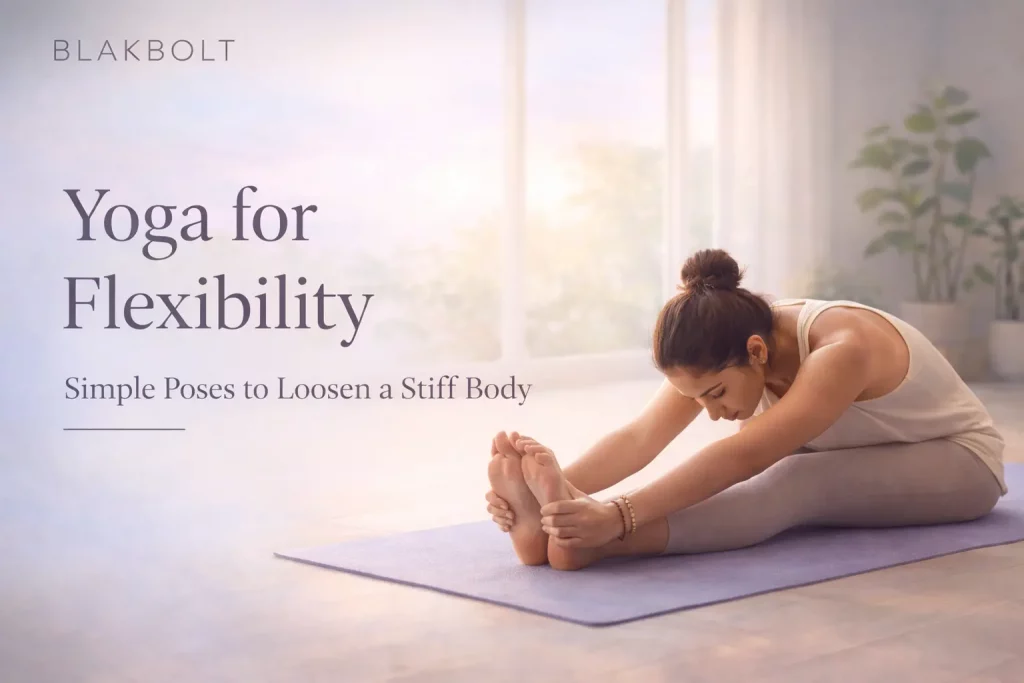
Seated Forward Fold is another helpful pose for flexibility, especially for beginners who prefer slower work on the floor. In this posture, the legs extend forward while the upper body folds gently over them. It stretches the hamstrings and back, but just as importantly, it teaches patience. Beginners often discover that flexibility improves more when they soften into the pose than when they try to conquer it. This pose is a lesson in intelligent effort. It asks for presence rather than performance.
Pose Seven: Butterfly Pose for Inner Hips
Butterfly Pose is excellent for opening the inner thighs and hips. Sitting with the soles of the feet together and the knees opening outward can reveal tightness many people did not realize they had. For some, this pose feels easy. For others, it shows how much restriction has built up in the hips over time. That is one of yoga’s gifts: it reveals patterns honestly. Butterfly Pose is especially useful because it is simple enough for beginners and effective enough to remain valuable even for experienced practitioners.
Pose Eight: Cobra Pose for the Front Body
Flexibility is not only about touching your toes. It also involves opening the front of the body. Cobra Pose helps stretch the chest, abdomen, and front shoulders while encouraging spinal extension. This is important because modern posture often makes people collapse forward. A body that only stretches forward without also opening backward remains unbalanced. Cobra helps restore that balance. It is like opening a book that has been shut too tightly for too long. The front body needs space too.
Why Gentle Repetition Creates Long-Term Change
The body changes through repeated exposure to healthy movement. This is one reason yoga works so well for flexibility. When you revisit the same types of stretches regularly, the body starts to trust the process. That trust matters. A body that feels threatened resists change. A body that feels supported adapts. This is why gentle repetition is more powerful than occasional dramatic effort. The effect may seem small from day to day, but over weeks and months it becomes very clear.
What Flexibility Progress Actually Looks Like
Progress in flexibility is not always dramatic. Sometimes it looks like less back discomfort when getting out of bed. Sometimes it means sitting more comfortably at a desk, walking with a lighter step, or noticing that a pose feels less restricted than it did two weeks ago. These small changes matter. A common mistake is thinking progress only counts when a big visible milestone happens. In reality, much of flexibility improvement appears first in how daily life feels. The body begins to move with less resistance, and that is a major success.
Common Mistakes People Make When Training Flexibility
A common mistake is stretching too aggressively, especially when the body is cold. Another is comparing your flexibility to someone else’s. A third is assuming that discomfort automatically means progress. In truth, too much intensity can make the body tighten more. Comparison can create unrealistic expectations, and pain is not the same as improvement. Yoga works best when the practitioner is attentive, not competitive. The body responds better to respect than to pressure.
Why Age Does Not Prevent Flexibility Gains
Many people assume it is too late to become more flexible once they are older, but that is not true. While the pace of change may differ from person to person, the body can still become more mobile at many stages of life. What matters most is regular practice, appropriate technique, and patience. Flexibility is not reserved for the young. It is a capacity that can be developed and maintained. In fact, improving flexibility later in life can be especially valuable because it supports comfort, balance, and independence in everyday movement.
A Simple Yoga Routine for Flexibility
A simple flexibility-focused yoga routine could begin with Cat-Cow, then move into Child’s Pose, Downward-Facing Dog, a Standing Forward Fold, Low Lunge on each side, Butterfly Pose, Seated Forward Fold, and Cobra Pose. Holding each posture for a few steady breaths is enough for beginners. This kind of sequence works because it addresses several major areas of stiffness without becoming overwhelming. It is realistic, repeatable, and effective.
Example of How Yoga Helps a Stiff Body
Imagine someone who spends most of the day working on a laptop. Their shoulders round forward, their hips tighten, and their hamstrings feel stiff. At first, even basic yoga poses may feel awkward. But after practicing a few times each week, they begin to notice that standing feels easier, bending is less uncomfortable, and their body no longer feels as locked up. This is how yoga improves flexibility in real life. It does not magically transform the body overnight. It retrains it gradually and intelligently.
The Deeper Lesson Behind Flexibility Training
At a deeper level, yoga for flexibility teaches more than stretching. It teaches patience, body awareness, humility, and consistency. It shows that real progress often happens quietly and through repetition. It also teaches a useful life principle: forcing results is often less effective than creating the right conditions for growth. In this way, flexibility practice becomes both physical and mental. The body becomes more open, but so does the approach to learning itself.
Conclusion: Loosening a Stiff Body with Yoga
Yoga for flexibility is one of the most practical and sustainable ways to loosen a stiff body. It helps improve movement, reduce tension, and make daily life feel easier and more comfortable. The key is not extreme poses or fast results. The key is simple, regular practice done with patience and awareness. With time, even a stiff body can become more open, more balanced, and more at ease. That is the real promise of yoga for flexibility: not perfection, but better movement and better living.