Yin Yoga: A Beginner-Friendly Technical Introduction
Yin Yoga is a slow style built around longer holds and a deliberate reduction in muscular effort. Instead of training speed or repeated transitions, Yin focuses on tolerance at end-range, calm attention, and controlled exposure to mild intensity. This article explains what Yin is, what it targets, and how beginners can practice it safely.
What Yin Yoga Is
Yin Yoga uses postures held for longer durations—commonly several minutes—while keeping effort intentionally low. The objective is not to “work harder,” but to create a stable, consistent stimulus at a manageable intensity. Technically, Yin trains end-range tolerance and breath-based regulation by holding shapes long enough for your nervous system to reduce protective tension.
Example
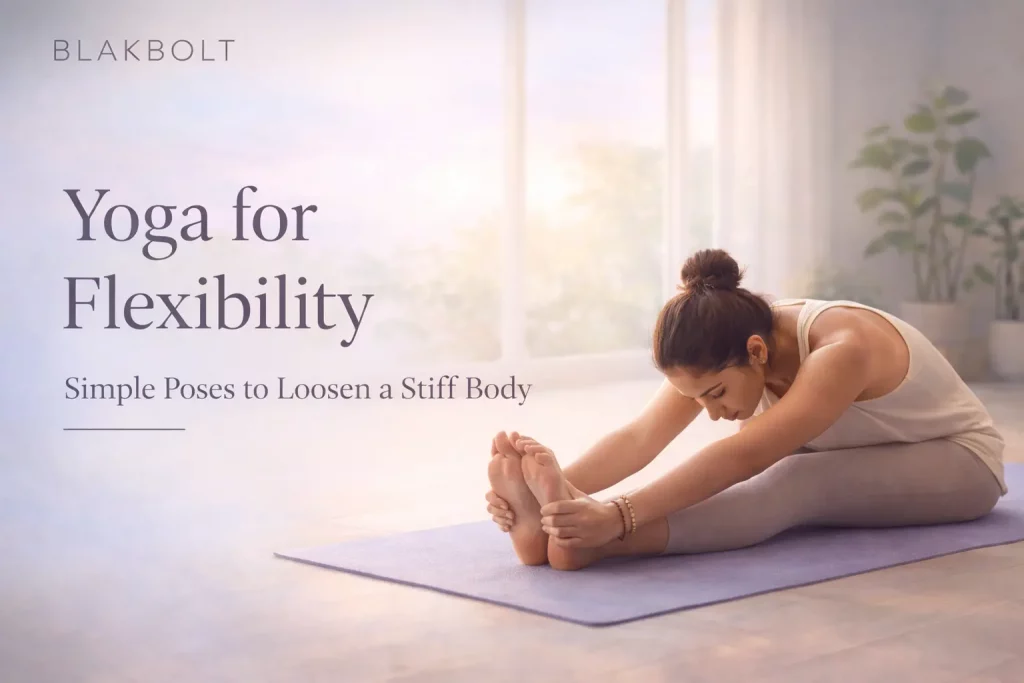
In a long seated forward fold, you aim for a mild-to-moderate sensation and steady breathing. If you feel sharp joint stress or have to brace aggressively, you reduce range or add support.
What Yin Yoga Targets (Simple Mechanics)
Yin targets tissues and sensations that are best trained with time rather than repetition. In practical terms, this can include connective-tissue tolerance (how comfortable you feel near end-range), joint positioning awareness, and breath control during stillness. The primary training variable is time under a gentle load, not intensity.
- Time: longer holds to reduce reactivity and increase tolerance.
- Range: exploring a safe end-range without forcing.
- Support: props to keep the stimulus in the right place (muscle vs. joint).
- Breath: slow, steady breathing to keep effort low and stable.
Example
In Butterfly (seated, soles of feet together), a cushion under knees can shift sensation from the inner knee joint into the hips, making the hold safer and more effective.
Yin Yoga vs. Vinyasa (Simple Comparison)
Yin and Vinyasa can both improve flexibility, but they do so through different mechanisms. Vinyasa uses repeated movement patterns and muscular engagement; Yin uses stillness and longer time under a gentle load. Beginners should choose based on goals and recovery needs.
Yin Yoga
- Long holds (minutes), low effort
- Primary variable: time, not speed
- Goal: tolerance, calm, stillness
- Best for: recovery and stiffness management
Vinyasa Yoga
- Continuous transitions, moderate effort
- Primary variable: pace and volume
- Goal: conditioning + coordination
- Best for: strength-endurance and flow skill
Example
If your body feels “wired” or fatigued, Yin can help downshift and restore comfort. If you want conditioning and movement practice, Vinyasa provides more repetition and intensity.
How Beginners Should Practice Yin
Yin is beginner-friendly when you control intensity. The best method is to use a simple sensation scale and a clear stop rule. Aim for a mild-to-moderate sensation that stays stable during the hold. Sensation should be “stretch-like,” not sharp, pinching, or numbness-producing. Props are not optional—they are precision tools for load management.
Example
Use a 0–10 scale: aim for about 3–5/10. If sensation climbs beyond that, or shifts into the joint line, back out and support the posture with a block or cushion.
Common Mistakes (and How to Avoid Them)
Yin is often practiced incorrectly by pushing too deep, too fast. That usually moves stress into joints rather than creating a safe, productive stimulus. Another mistake is holding the breath when intensity rises—breath holding is a strong indicator the posture is too aggressive. A safe Yin practice feels controlled, patient, and repeatable.
- Mistake: forcing range → Fix: reduce depth and add props.
- Mistake: numbness/tingling → Fix: exit immediately and adjust position.
- Mistake: breath holding → Fix: lower intensity until breath is smooth.
- Mistake: joint pain → Fix: change angle, support, or skip the pose.
Example
In a hip opener like Pigeon, if the knee feels compressed, you can switch to a supported figure-4 on your back. The goal is hip sensation—not knee stress.
Safety note: sharp pain, numbness, tingling, or joint-line pain is a stop signal. Modify range, use props, and consider professional guidance if you have injuries or medical conditions.
- How to Practice Yin Yoga Safely for Beginners
Create a Calm Environment
Find a quiet and comfortable place where you can practice without distractions. Yin Yoga is a meditative style of yoga, so a peaceful environment helps you relax and focus. Many practitioners like to dim the lights or play soft music to enhance the experience. - Use Supportive Yoga Props
Yin Yoga poses are held for several minutes, so using props such as yoga blocks, bolsters, cushions, or blankets can make the poses more comfortable. Props help support your body and prevent unnecessary strain on your joints.
- Warm Up Your Body Gently
Although Yin Yoga is slow, it is helpful to do a light warm-up before starting. Simple movements such as gentle stretches or a few minutes of deep breathing can prepare your muscles and joints for longer holds.
- Hold Each Pose for 3–5 Minutes
Move slowly into a Yin Yoga pose and hold it for several minutes while breathing deeply. The goal is not to push your body to the limit but to relax into the stretch and allow your connective tissues to gradually release tension.
- Focus on Your Breathing
Deep, steady breathing is an essential part of Yin Yoga. Slow breaths help calm the nervous system and allow your body to relax deeper into each pose. Try breathing through your nose and maintaining a steady rhythm.
- Exit Poses Slowly
After holding a pose, come out of it slowly and gently. Yin Yoga affects deep tissues, so moving carefully helps prevent discomfort and allows the body to adjust.
- End with Relaxation
Finish your Yin Yoga session with a few minutes of relaxation, such as lying in Savasana (Corpse Pose). This helps your body absorb the benefits of the practice and leaves you feeling calm and refreshed.
Regular Yin Yoga practice can improve flexibility, reduce stress, and support overall wellbeing, making it a valuable addition to any yoga routine.